
In June 2022 I sat — and passed — Exam DP-900 and earned the Microsoft Certified: Azure Data Fundamentals credential. I run a software company on the Microsoft stack, I have written more SQL than I care to count, and I could have shrugged this one off as "too basic for me." I did the opposite, and I have not regretted it. This is the post I wish someone had handed me before I booked the exam: what the certification actually is, what it actually tests, why I bothered, and how a foundations credential shows up in the work we do at ThreeBIT every week.

What Azure Data Fundamentals is
Microsoft Certified: Azure Data Fundamentals is a beginner-level certification that "demonstrates foundational knowledge of core data concepts and related Microsoft Azure data services." You earn it by passing a single exam, DP-900. There are no prerequisites — you can sit it on day one of your data journey, and Microsoft explicitly markets it to people "beginning to work with data in the cloud."
It is worth being honest about where it sits in the hierarchy. It is a Fundamentals credential, the same family as AZ-900 (Azure Fundamentals) and AI-900 (AI Fundamentals). It is not a role-based certification like Azure Database Administrator Associate or Azure Data Engineer Associate. Microsoft is careful about this: Azure Data Fundamentals can help you prepare for those role-based certifications, but it is not a prerequisite for any of them. You do not have to climb this rung before the next one — it simply makes the climb easier.
What it certifies is breadth, not depth: the vocabulary, the mental map, the ability to look at a data problem and say "that is an analytical workload, this belongs in a relational store, that document goes in Cosmos DB" without having to look any of it up. For a founder who has to make and defend those calls in front of customers, that map is the whole point.
What it actually certifies
Here is the part most people skip and then regret in the exam room. DP-900 is organised into four skill areas, each with a published weighting (these are the skills measured as of the 1 November 2024 update, current at the time of writing):
- Describe core data concepts (25–30%) — ways to represent data (structured, semi-structured, unstructured), options for data storage, common data file formats and database types, the difference between transactional and analytical workloads, and the roles and responsibilities of database administrators, data engineers and data analysts.
- Identify considerations for relational data on Azure (20–25%) — relational concepts, what normalization is and why it exists, common SQL statements, common database objects, and the Azure SQL family: Azure SQL Database, Azure SQL Managed Instance and SQL Server on Azure Virtual Machines, plus Azure's managed open-source database services.
- Describe considerations for working with non-relational data on Azure (15–20%) — the capabilities of Azure Storage (Blob, File, Table) and the features, use cases and APIs of Azure Cosmos DB.
- Describe an analytics workload on Azure (25–30%) — common elements of large-scale analytics, analytical data stores, Microsoft's cloud services for large-scale analytics (including Azure Databricks and Microsoft Fabric), the difference between batch and streaming data, real-time analytics, and data visualization in Microsoft Power BI.
The exam itself is straightforward by certification standards. A score of 700 or greater (out of 1000) is required to pass. It is available in many languages — including German — and if it is not offered in your preferred language you can request extra time. There is a free practice assessment and an exam sandbox on Microsoft Learn, both of which I would recommend over the swamp of third-party brain dumps.
The thing I want to underline is the shape of those weightings. Core concepts and analytics each carry up to 30%; relational and non-relational together make up the middle. That is not an accident. Microsoft is signalling that knowing what kind of problem you have — and how you would analyse the data once you have it — matters as much as knowing the syntax of a JOIN. That bias toward judgement over trivia is exactly why a credential like this is worth a working professional's time.

Why I bothered to certify
I will be candid: nobody made me do this, and on paper I did not "need" it. So why spend the evening and the exam fee?
First, the map matters more than the trivia. I have spent years deep in specific corners — a particular schema, a particular query plan, a particular performance bug at 11pm. A Fundamentals exam forces you to step back and re-draw the whole map: where does a transactional workload end and an analytical one begin, when is a document store genuinely the right call rather than a habit, what does a data engineer own that a data analyst does not. Re-learning the boundaries you think you already know is humbling in a useful way. It closed gaps I did not know I had — especially on the modern analytics stack, where Fabric and Databricks have moved faster than my day-to-day reading kept up with.
Second, I do not ask anyone on the team to do something I would not do myself. I think credentials are a reasonable, low-ego way to keep a team's knowledge honest and current, and the only credible way to say that is to hold a few yourself. Earning DP-900 myself means that when I encourage someone to sit it, I am speaking from the chair, not from the corner office.
Third, it is a promise to customers. When a German manufacturer or service business hands us their data, they are trusting that we know the difference between a well-designed relational model and a pile of tables that happen to be in the same database. A vendor-neutral, vendor-verified credential is a small but real piece of evidence that the foundations are not improvised. It is the same instinct that makes me want our work to be verifiable rather than merely asserted — which is why there is a verification link at the bottom of this post.
How it shows up in our work at ThreeBIT
This is where a "basic" certification quietly earns its keep, because almost everything we build at ThreeBIT is data-heavy line-of-business software. Xircuit and Outastory, and the custom systems we deliver alongside them, are not toys that store a handful of records — they are the systems a business actually runs on. And in that work, the DP-900 map is in play constantly.
Relational first, and deliberately so. The core of a line-of-business system is almost always a well-normalized relational model on the Azure SQL family. That is not nostalgia; it is the right tool when correctness and integrity are non-negotiable. In the industries we serve, a bug is not a cosmetic regression — it is a missed export, a failed payment, a compliance finding. Knowing precisely why normalization exists, what guarantees a relational engine gives you, and which member of the Azure SQL family fits a given constraint (managed database, managed instance, or SQL Server on a VM when a customer needs that control) is daily bread.
Non-relational where it genuinely fits. Not every shape of data wants to be a row. Documents, blobs, telemetry, the semi-structured payloads that arrive from integrations — these belong in Azure Storage or Cosmos DB, and one of the more useful disciplines DP-900 reinforces is recognising which problem you have before you reach for a tool. The credential gave me cleaner language for a decision I was already making, often more by instinct than by articulated reasoning.
Analytics as a first-class concern. The weighting DP-900 gives to analytics matches reality. Customers do not just want their data stored correctly; they want to see it — the dashboard, the report, the number that tells them whether the month went well. Understanding the boundary between the transactional store that runs the business and the analytical layer that explains it — and being fluent in where Power BI, and increasingly Fabric, fit on top — is the difference between a system that merely records and one that informs. That distinction, transactional versus analytical, is the very first thing DP-900 drills into you, and it is the distinction I use most.
None of this is exotic, and that is precisely the point. A Fundamentals certification is not where you learn the hard-won, scar-tissue lessons of a decade in production. It is where you make sure the foundation under those lessons is solid, shared and named — so that when a customer asks why their data lives where it lives, the answer is a clear sentence rather than a shrug. For a company whose whole promise is that things work the first time, that is worth an evening and an exam fee.
Sources & further reading
- Microsoft Learn — Microsoft Certified: Azure Data Fundamentals (certification overview): https://learn.microsoft.com/en-us/credentials/certifications/azure-data-fundamentals/
- Microsoft Learn — Exam DP-900: Microsoft Azure Data Fundamentals: https://learn.microsoft.com/en-us/credentials/certifications/exams/dp-900/
- Microsoft Learn — Study guide for Exam DP-900 (skills measured and weightings): https://learn.microsoft.com/en-us/credentials/certifications/resources/study-guides/dp-900
- Microsoft Learn — Exam scoring and score reports (pass score of 700): https://learn.microsoft.com/en-us/credentials/certifications/exam-scoring-reports
- Microsoft Learn — Course DP-900T00-A: Introduction to Microsoft Azure Data: https://learn.microsoft.com/en-us/training/courses/dp-900t00
Image credits
All images are used under their respective Creative Commons or public-domain terms; we are grateful to the creators.
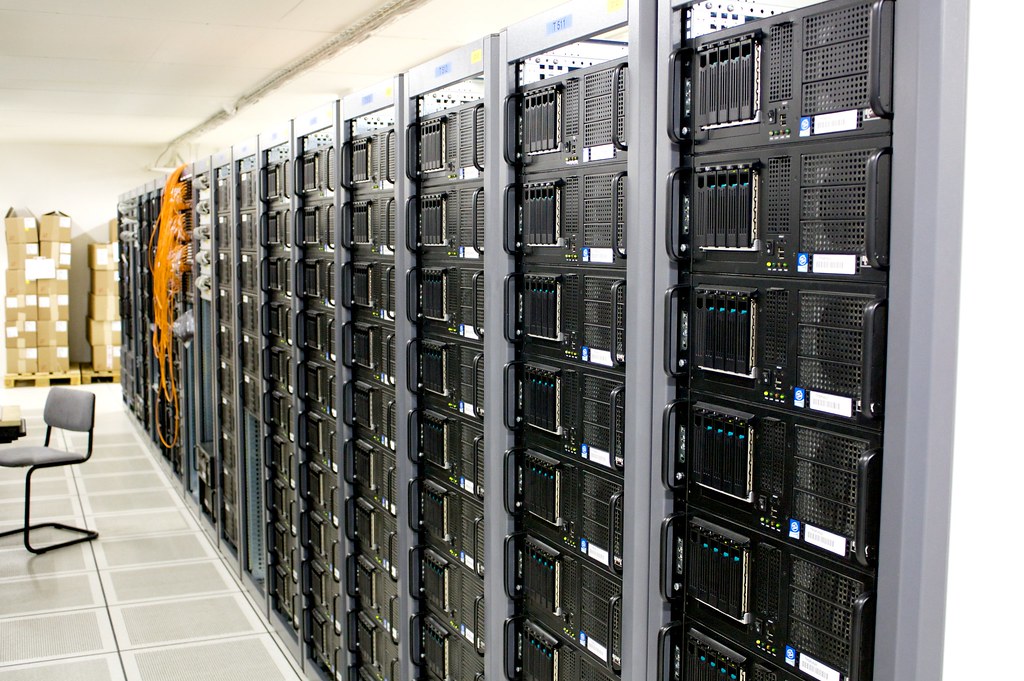
- Server room — © torkildr, CC BY-SA 2.0, via Flickr (source).
- BIG DATA IN PRACTICE BY BERNARD MARR [PREDICT AT THE RDS OCTOBER 2016]-121681 — © infomatique, CC BY-SA 2.0, via Flickr (source).
Comments
No comments yet. Be the first to share your thoughts!
Leave a Comment
Your comment will be reviewed before it appears publicly.