In February 2024 I sat exam AI-900 and earned the Microsoft Certified: Azure AI Fundamentals credential. I'm Thimo Buchheister, founder and CEO of ThreeBIT GmbH in Ibbenbüren, and I want to be honest up front about why a founder of a Microsoft-stack shop bothers with a beginner-level exam: not because it taught me to train a model, but because it gave me a shared, precise vocabulary for the most overhyped topic of the decade — and a sober map of what responsible AI actually demands when you're shipping it into someone else's business.

What Azure AI Fundamentals is
Azure AI Fundamentals is the entry point into Microsoft's AI certification track. It's pitched squarely at people with both technical and non-technical backgrounds — Microsoft is explicit that "data science and software engineering experience are not required," and that there are no prerequisites. You don't need AZ-900 or any other badge first. The only things Microsoft suggests you'd benefit from knowing going in are basic cloud concepts and the idea of client-server applications.
That positioning is the whole point. AI-900 isn't trying to turn you into a data scientist. It's the foundations tier — the level whose job is to make sure that when a room full of people say "AI," "model," "training," "responsible AI" or "generative AI," they all mean the same thing. For a founder who sits in sales conversations, scoping calls and architecture reviews, that common vocabulary is worth more than another deep specialism I'd never use end-to-end myself.
A note on the credential's lifecycle, because I value accuracy over a clean story: Microsoft updated the English exam on 2 May 2025 to substantially expand the generative AI content, and has since announced that AI-900 will retire on 30 June 2026 and be replaced by AI-901. My certification stands — the Azure AI Fundamentals credential continues, and you'll be able to earn it through AI-901 once AI-900 is gone. I'm writing about the exam as I sat it and as it stands today, while flagging that the syllabus is a moving target. In a field this fast, that churn is itself part of the lesson.
What it actually certifies
The exam measures whether you can describe — not build — five areas of AI on Azure. The weightings tell you where Microsoft thinks the centre of gravity sits today:
- Artificial Intelligence workloads and considerations (15–20%) — identifying computer vision, natural language processing, document processing and generative AI workloads, and, crucially, the six guiding principles of responsible AI: fairness, reliability and safety, privacy and security, inclusiveness, transparency, and accountability.
- Fundamental principles of machine learning on Azure (15–20%) — regression, classification and clustering scenarios; features and labels; training versus validation datasets; deep learning and the Transformer architecture; and what Azure Machine Learning (including automated ML) brings to the table.
- Computer vision workloads on Azure (15–20%) — image classification, object detection, optical character recognition, facial detection and analysis, and the Azure AI Vision and Face services.
- Natural Language Processing on Azure (15–20%) — key phrase extraction, entity recognition, sentiment analysis, language modelling, speech recognition and synthesis, and translation, via the Azure AI Language and Speech services.
- Generative AI workloads on Azure (20–25%) — features of generative AI models, common scenarios, the responsible-AI considerations specific to generative AI, and the services that deliver it: Azure AI Foundry, Azure OpenAI Service, and the Foundry model catalogue.
That last domain is the headline change. When the syllabus was updated, generative AI didn't just get added — it became the single largest section of the exam, and the old "Azure OpenAI Service" objective was broadened into a wider treatment of generative AI services and responsible use. The exam now spends as much time on how to use generative AI responsibly as on what it can do.
On the mechanics: the passing score is 700 (on Microsoft's 1,000-point scale, which is scaled, not a raw percentage). It's available in thirteen languages — English, German, French, Spanish, Japanese, Korean, both Chinese variants, Portuguese, Russian, Italian, Indonesian and Arabic — and passing it can even count toward ACE college credit in the US. It's a beginner exam, but it's a real one.

Why I bothered to certify
I could have read the documentation. I do read the documentation. So why book the exam?
Three honest reasons.
First, a deadline produces understanding that a bookmark never will. Open-ended "I'll learn this properly someday" reading drifts. An exam date forces you to close the loops you'd otherwise leave dangling — the difference between regression and classification, what a validation set is actually for, why the Transformer architecture mattered enough to reshape the whole field. I knew most of it in fragments. The exam made me knit the fragments into something I could explain on a whiteboard.
Second, credibility with customers and partners. We're a Microsoft-stack company. When I tell a client we'll build an AI feature responsibly on Azure, it carries more weight if I can point to a Microsoft credential that says I understand the platform's AI services and — more importantly — its responsible-AI framework. It's a small signal, but signals compound. It's the same instinct behind every certification we hold: we'd rather show the badge than ask you to take our word for it.
Third — and this is the founder's reason — I won't ask my team to value something I haven't done myself. If certification is part of how we demonstrate competence at ThreeBIT, the person at the top should be on that ladder too, not exempt from it. Sitting AI-900 myself, beginner level and all, is a cheap way to keep that honest.

How it shows up in our work at ThreeBIT
Here's where the abstract becomes concrete. ThreeBIT builds software for industries where a bug isn't a cosmetic glitch — it's a missed export, a failed payment, or a compliance finding. Increasingly, customers want AI features inside those systems: a document that classifies itself, a support flow that drafts a reply, a search box that understands intent rather than keywords. And the moment you put a generative model anywhere near a regulated workflow, the interesting questions stop being "can it?" and become "should it, and how do we prove it behaves?"
That's exactly the territory AI-900's responsible-AI material maps. The six principles aren't slideware to me; they're a checklist I genuinely run through:
- Fairness — does the model treat comparable cases comparably, or has it inherited a bias from its training data that would quietly disadvantage a group of users?
- Reliability and safety — what happens at the edges, with malformed input, with the prompt nobody anticipated? In a regulated workflow, the failure mode matters more than the happy path.
- Privacy and security — where does the customer's data go, what does the model retain, and can we draw a defensible line around it? This is non-negotiable for the businesses we serve.
- Inclusiveness — does the feature work for everyone who has to use it, not just the median user we imagined while building it?
- Transparency — can we explain, in plain terms, what the system is doing and why? "The AI decided" is not an answer a compliance officer accepts.
- Accountability — when something goes wrong, who owns it? A human does. Always. The model is a tool, not a scapegoat.
Knowing the difference between when a problem wants classical machine learning, a vision service, an NLP service, or a generative model is equally practical. The temptation in 2024 — and it hasn't faded — is to reach for a large language model for everything, including problems a small, cheap, predictable classification model would solve better, faster and more auditably. AI-900's tour of the whole toolbox makes me a better steward of a customer's budget and a better judge of which tool actually fits, rather than which one is loudest in the press.
That's the real return on a beginner certification. Not that it made me an AI engineer — it didn't, and it doesn't claim to. It gave me a precise mental model of Azure's AI landscape and a serious grounding in responsible AI, at exactly the moment generative AI went from a curiosity to something our customers ask for by name. In our world, foundations aren't the boring part. They're the part that keeps the clever part from going wrong.
Sources & further reading
- Microsoft Learn — Microsoft Certified: Azure AI Fundamentals (certification overview): https://learn.microsoft.com/en-us/credentials/certifications/azure-ai-fundamentals/
- Microsoft Learn — Exam AI-900: Microsoft Azure AI Fundamentals (exam details, passing score, languages, retirement notice): https://learn.microsoft.com/en-us/credentials/certifications/exams/ai-900/
- Microsoft Learn — Study guide for Exam AI-900 (skills measured as of 2 May 2025, change log, responsible AI principles): https://learn.microsoft.com/en-us/credentials/certifications/resources/study-guides/ai-900
- Microsoft Learn — Exam AI-901: Microsoft Azure AI Fundamentals (beta) (the replacement exam): https://learn.microsoft.com/en-us/credentials/certifications/exams/ai-901/
- Microsoft Learn — Course AI-900T00-A: Introduction to AI in Azure: https://learn.microsoft.com/en-us/training/courses/ai-900t00
Image credits
All images are used under their respective Creative Commons or public-domain terms; we are grateful to the creators.
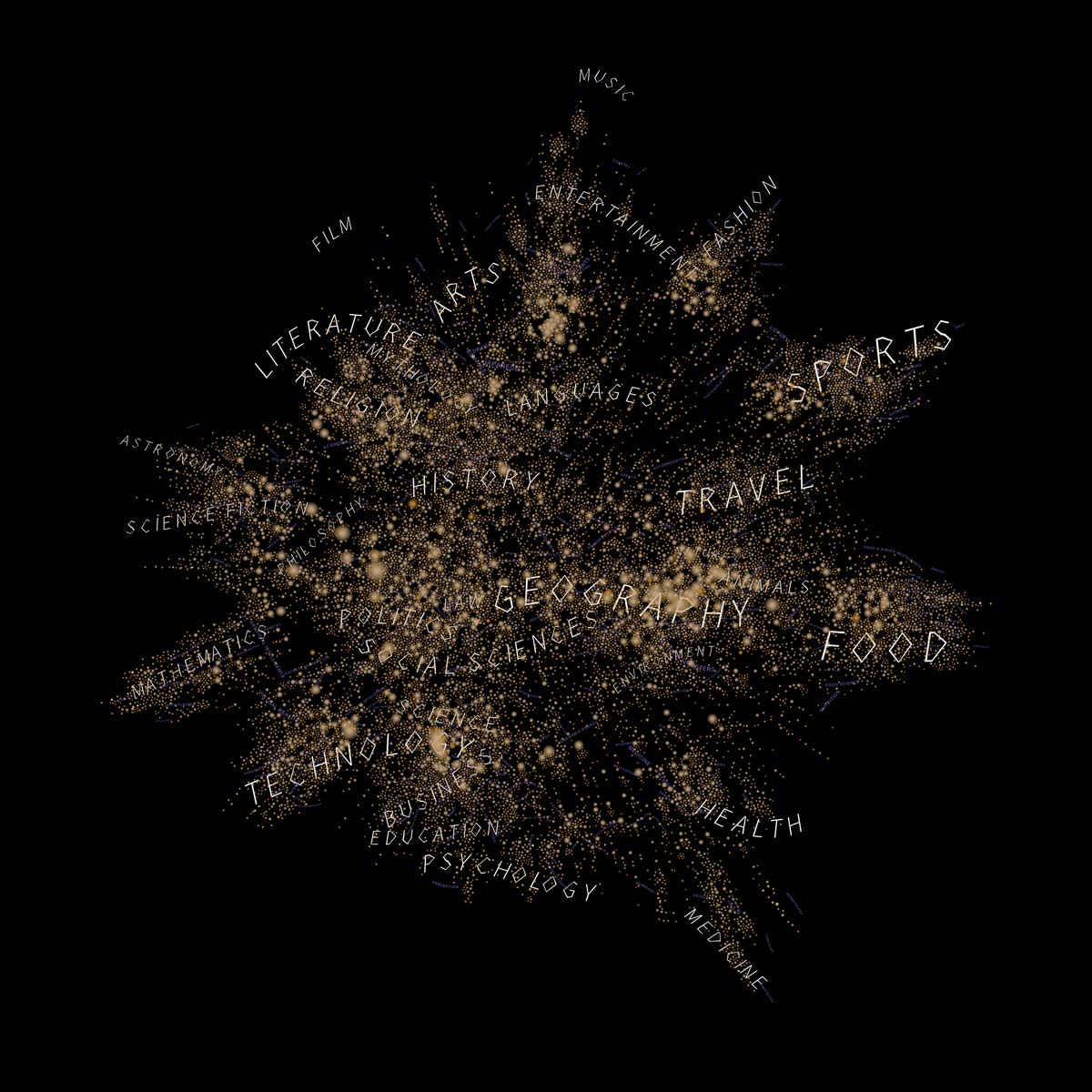
- Artificial Worldviews Mapping ChatGPT — © Kimfalbrecht, CC BY-SA 4.0, via Wikimedia Commons (source).
- +20x Macro Lens 58mm for DSLR (1) — © Suyash Dwivedi, CC BY-SA 4.0, via Wikimedia Commons (source).
- Facade of the polyhedral glass building The Iceberg, Shibuya, Tokyo, Japan — © Basile Morin, CC BY-SA 4.0, via Wikimedia Commons (source).
Comments
No comments yet. Be the first to share your thoughts!
Leave a Comment
Your comment will be reviewed before it appears publicly.